A sofa is usually the most expensive piece of furniture in a home, and the one you use every single day. Yet most people choose one by sitting on it in a showroom for thirty seconds and looking at the colour. The parts that decide whether it lasts three years or fifteen are hidden under the fabric. Here is what to ask about.
The frame
The frame is the skeleton, and it is the first thing to fail on a cheap sofa. The best frames are kiln-dried hardwood, such as beech or oak, joined with dowels, glue and corner blocks rather than just staples. Kiln drying matters because damp wood shrinks and loosens over time.
Avoid frames made mainly from particleboard or soft pine. A quick test in the shop: lift one front corner of the sofa about 15 centimetres. If the other front leg lifts almost at the same time, the frame is rigid. If it twists and the other leg stays down, the frame is flexing.
The suspension
Under the seat cushions there is a support system. In order of quality, from best to most basic:
- Hand-tied springs: traditional, very durable, found on high-end sofas.
- Pocket springs or sinuous (zigzag) springs: good quality and common on mid-range sofas. Sinuous springs should be closely spaced and well attached.
- Webbing only: elastic straps without springs. Fine on light chairs, but on a sofa it tends to sag within a few years.
The cushions
Cushion filling decides how the sofa feels and how it ages.
- High-density foam keeps its shape well and feels firm. Look for a density figure; higher is better and lasts longer.
- Foam wrapped in fibre or feather gives a softer, more relaxed sit while keeping structure. This is the sweet spot for many homes.
- All feather is very comfortable and looks luxurious, but needs plumping daily and flattens quickly.
Removable cushion covers with zips are a big advantage. They can be cleaned, and cushions can be flipped to spread wear.
The fabric
For fabric, ask about the rub count, usually tested by the Martindale method. It measures how many rubs a fabric survives before showing wear. For a sofa used every day, look for at least 20,000 to 25,000. For family homes with pets and children, 30,000 or more.
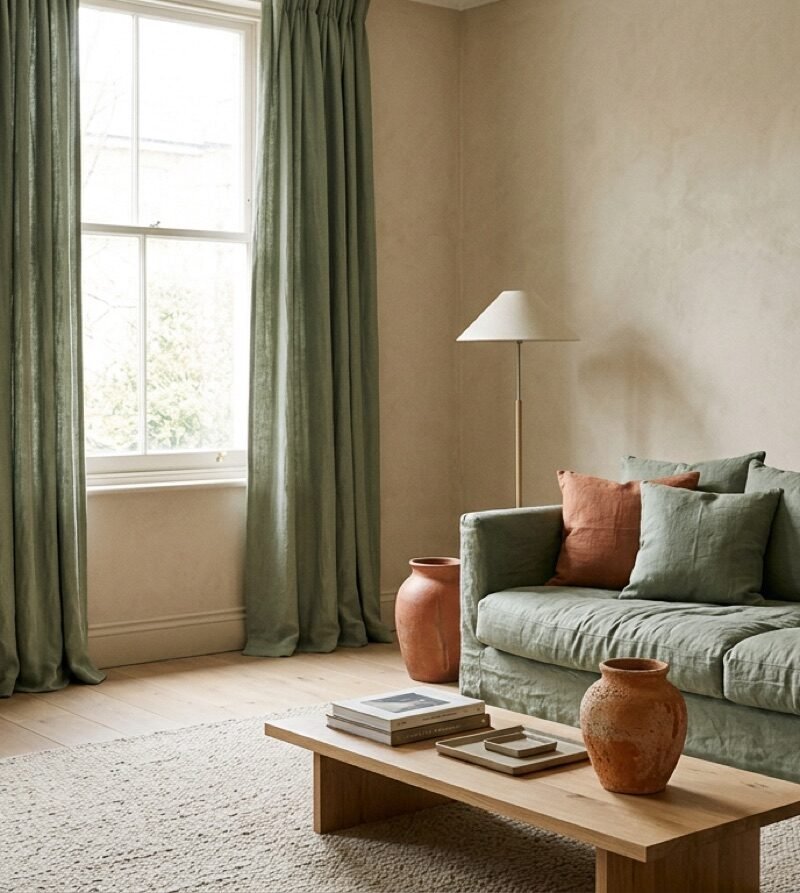
Tightly woven fabrics resist snags from pets better than loose, textured weaves. Performance fabrics, designed to resist stains, are worth considering for light colours. Linen looks beautiful but creases and marks more easily. Leather wears well and ages gracefully if it is good quality; see our note on leather in materials that age well.
Size and proportion
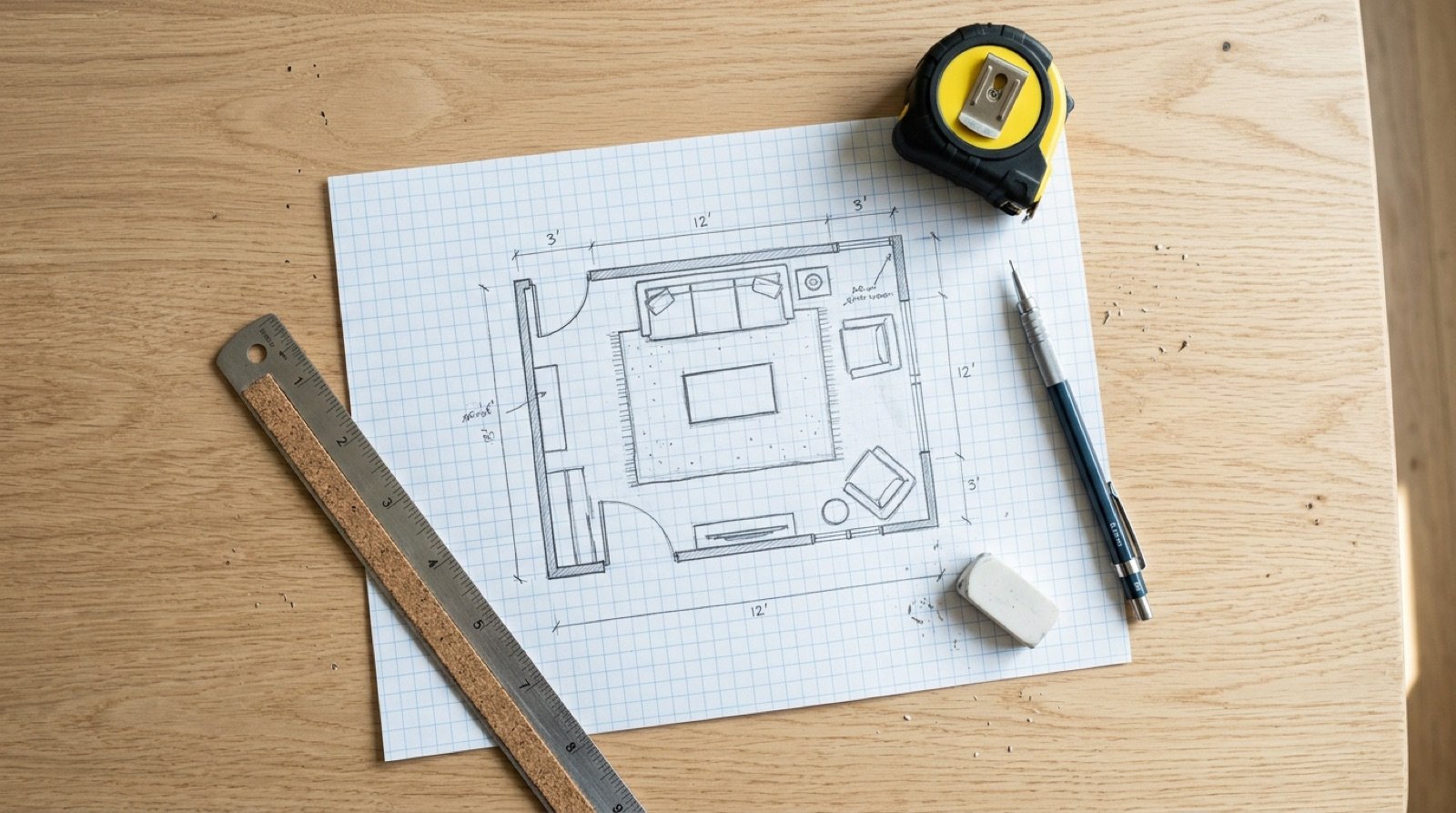
Measure the room, the doorways and any tight corners in the stairwell before you fall in love with anything. Then think about proportion:
- A seat depth of around 55 to 60 centimetres suits most people for upright sitting. Deeper seats are great for lounging but need extra cushions for shorter people.
- Seat height of 40 to 45 centimetres is comfortable for most adults and easy to get up from.
- Leave space around the sofa for walking and side tables. A slightly smaller sofa in the right place looks better than the largest one that technically fits.
Questions to ask before you pay
- What is the frame made from, and how is it joined?
- What kind of springs does it have?
- What is inside the cushions, and are the covers removable?
- What is the fabric’s rub count?
- How long is the guarantee on the frame and springs?
- Can I order fabric samples to see at home?
A seller who can answer these clearly is usually selling a sofa they are proud of. If the answers are vague, take that as information too.