A small bedroom does not have to feel small. Some of the most restful bedrooms are tiny, because they have one job and do it well. The trick is to plan carefully, keep the floor as clear as possible and make the walls work harder. Here is how.
Start with the bed
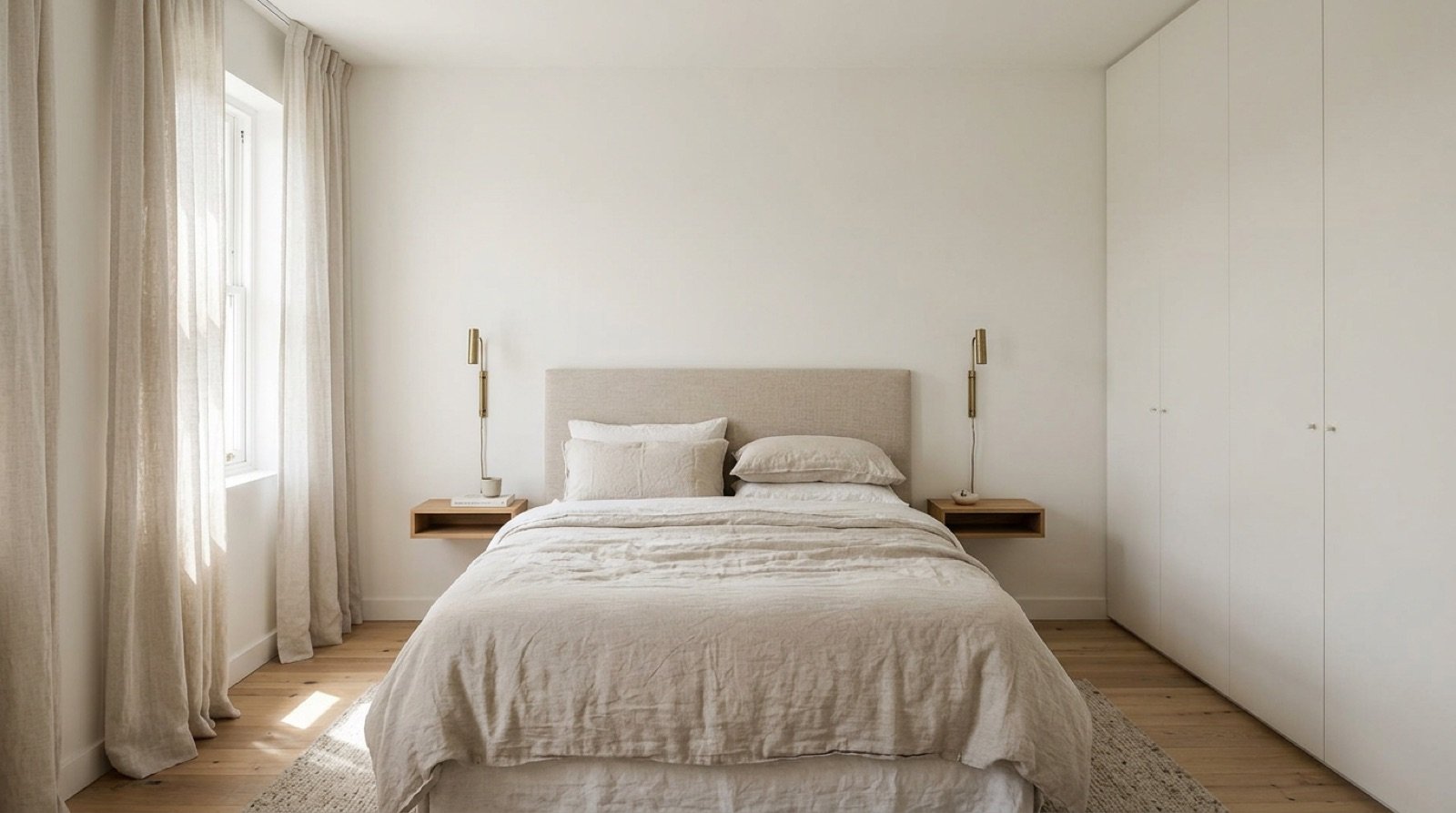
The bed is the largest object in the room, so its position decides everything else. In most small bedrooms, the best place is centred on the wall opposite the door, or on the longest wall without a window. You see the bed as you walk in, which feels calm, and you can get in from both sides.
Leave at least 60 centimetres between the bed and the walls or furniture on each side where people walk, and about 75 centimetres at the foot if a wardrobe or chest of drawers sits opposite. If that is impossible, pushing one side of the bed against the wall can free up a lot of floor, especially in a room used by one person.
Think about the size of the bed
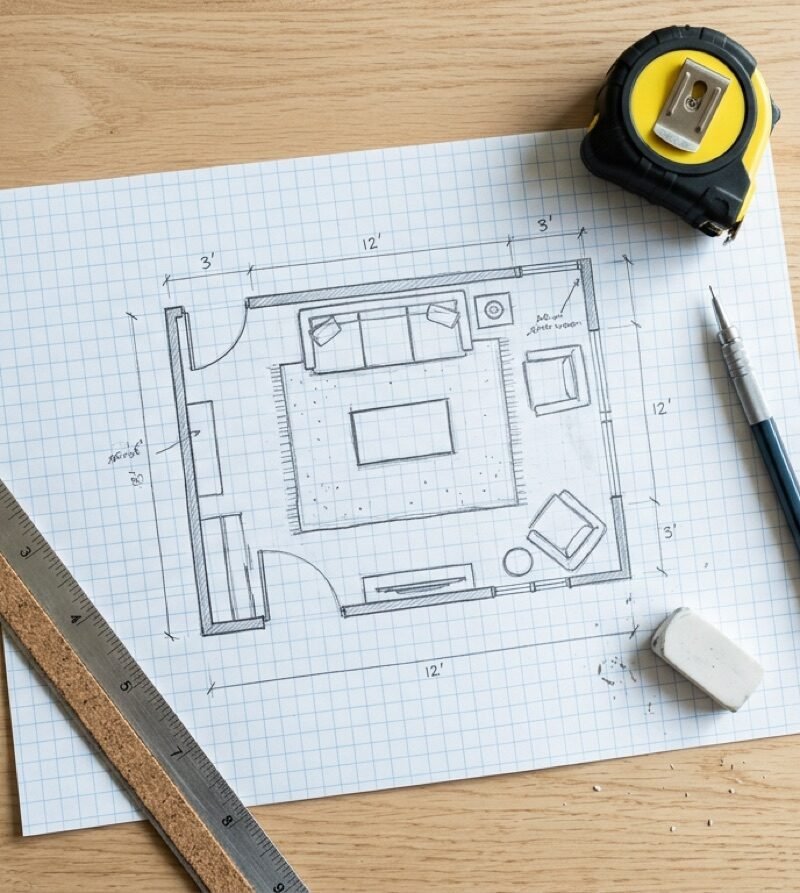
It is tempting to fit the biggest bed possible. Sometimes a slightly smaller bed makes the whole room work: space for bedside tables, a clear path and a wardrobe door that opens fully. Measure first, and use tape on the floor to test before you buy. Our guide to measuring a room explains how.
Go up, not out
In a small room, wall space is more valuable than floor space.
- Built-in or tall wardrobes: run them floor to ceiling. They hold far more than freestanding pieces and look less bulky, especially painted the same colour as the walls.
- Wall-mounted lights: reading lights fixed to the wall free up bedside tables entirely.
- Floating shelves: narrow shelves can replace bedside tables altogether.
- Storage over the door: a shelf above the door is useful for things you rarely need.
Use the space under the bed
A bed with drawers underneath, or a lift-up ottoman bed, can hold bedding, out-of-season clothes and suitcases. This often removes the need for an extra chest of drawers, which frees up more floor than anything else you could do.
Keep the colours calm and close
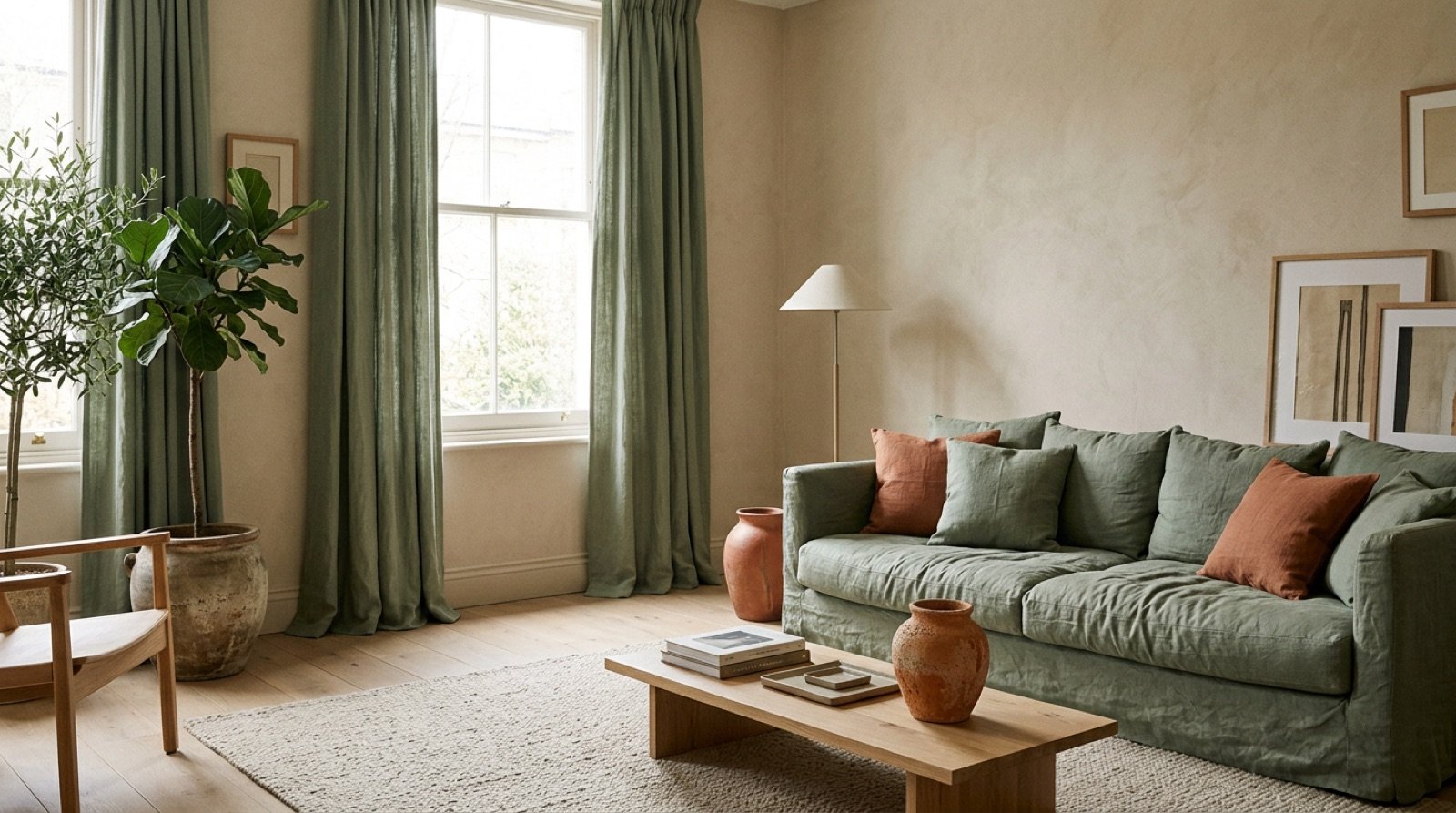
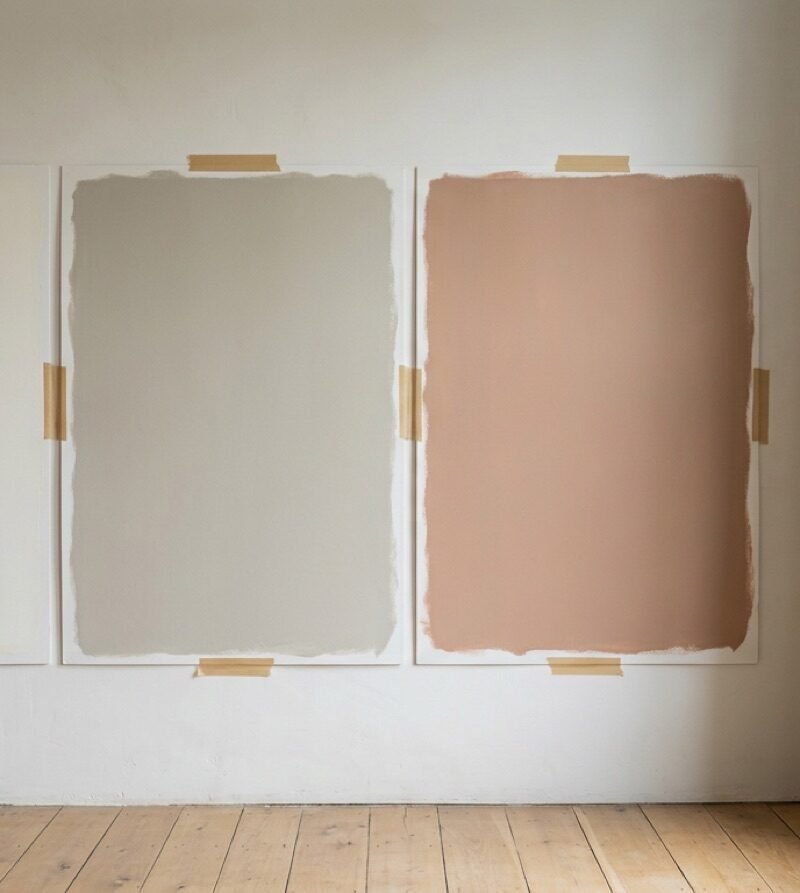
Light, soft colours help a small room feel more open, but you do not need bright white. Warm off-whites, soft greiges and pale earthy tones feel restful. Painting the walls, wardrobes and even the ceiling in similar shades blurs the edges of the room and makes it feel larger.
Dark colours can work too. A small bedroom painted entirely in a deep, warm colour can feel cosy and enveloping, which some people prefer for sleeping. What makes a small room feel cramped is contrast and clutter, not darkness.
Curtains, high and wide
Hang curtains close to the ceiling and extend the rail 15 to 25 centimetres beyond the window on each side. When open, the curtains sit beside the window rather than covering it, letting in more light and making the window look larger.
Mirrors, used carefully
A large mirror reflects light and adds depth. Place it where it reflects a window or a calm wall, not the bed or a cluttered corner. A full-length mirror on the inside of a wardrobe door saves space altogether.
Light it softly
Avoid relying on a single bright ceiling light. Wall lights for reading, a small lamp and perhaps a soft light inside the wardrobe are enough. Warm bulbs, around 2700K, help the room feel restful in the evening.
Edit ruthlessly
The last step is the most effective. A small bedroom should hold only what belongs there: the bed, clothes storage, light and a few things you love. Move the desk, the exercise bike and the pile of laundry elsewhere if you can. The room will feel larger not because it has more space, but because it has less in it.