Most colour mistakes are not taste mistakes. They are light mistakes. The paint looked perfect on the card in the shop, then turned grey, green or oddly pink on the wall at home. Nothing was wrong with the paint. The room simply had different light from the shop, and the paint did what paint always does: it reflected what it was given.
That is why designers look at the light before they look at a single sample. Here is how to do the same in your own home.
Which way does the room face?
Use the compass on your phone and stand with your back to the main window. The direction you are facing is the direction the room faces. In the northern hemisphere, it tells you a great deal.
- North-facing rooms get indirect light all day. It is steady and soft, but cool and slightly blue. Colours here look darker and greyer than on the card.
- South-facing rooms get strong, warm light for most of the day. Colours look brighter and warmer, and pale shades can almost disappear in the middle of the day.
- East-facing rooms are bright and warm in the morning and turn cooler and flatter in the afternoon.
- West-facing rooms are fairly neutral in the morning and glow orange in the late afternoon and evening.
If you live in the southern hemisphere, swap north and south. The logic stays the same.
What that means for colour
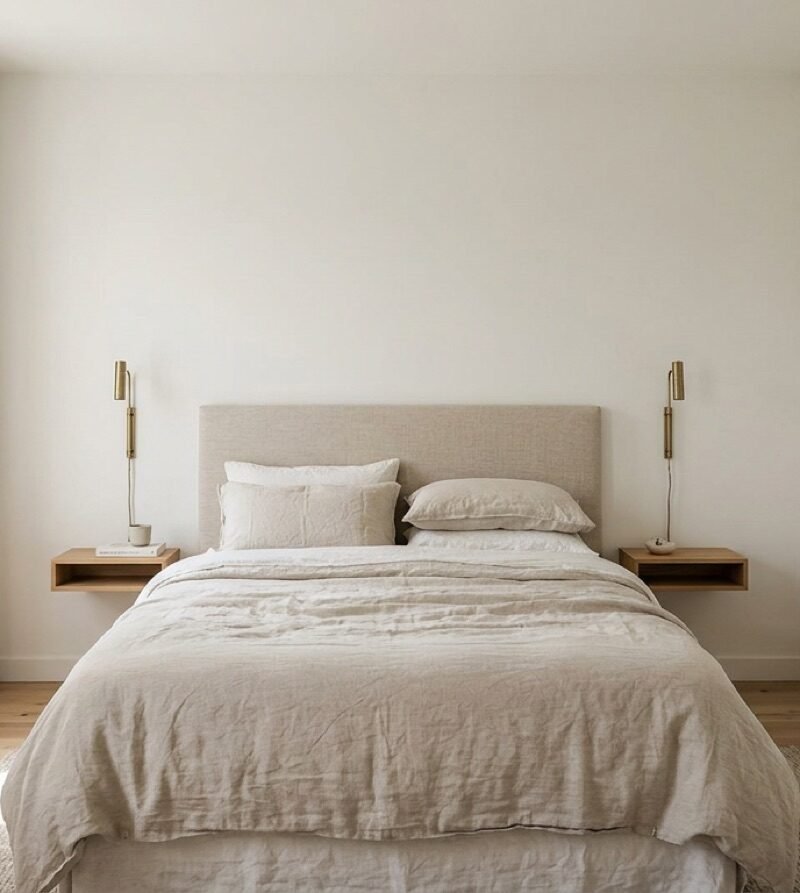
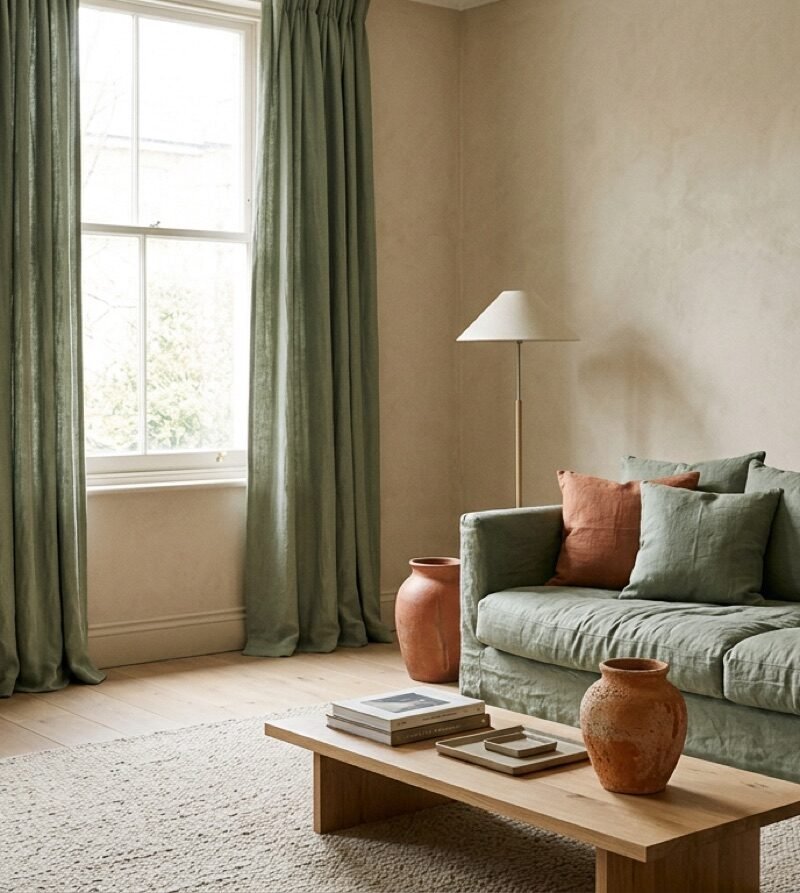
A north-facing room is the one that catches people out most often. Cool whites and pale greys, which look crisp in a showroom, can feel cold and slightly dirty under that blue light. Whites with a warm, yellow or red undertone usually work better, as do earthy colours that already have some warmth in them: clay, ochre, warm greige, soft olive.
A south-facing room can take almost anything, and cooler colours often look their best here because the warm light balances them. A pale blue-grey that looks icy in a north room can look fresh and gentle in a south one.
East and west rooms change character through the day, so think about when you actually use them. A west-facing living room used mainly in the evening will be bathed in warm light exactly when you are in it. A bedroom facing east will be bright when you wake up and fairly cool by bedtime, when the lamps take over.
We cover undertones in more detail in our guide to choosing paint colours, which pairs well with this one.
Light changes materials too
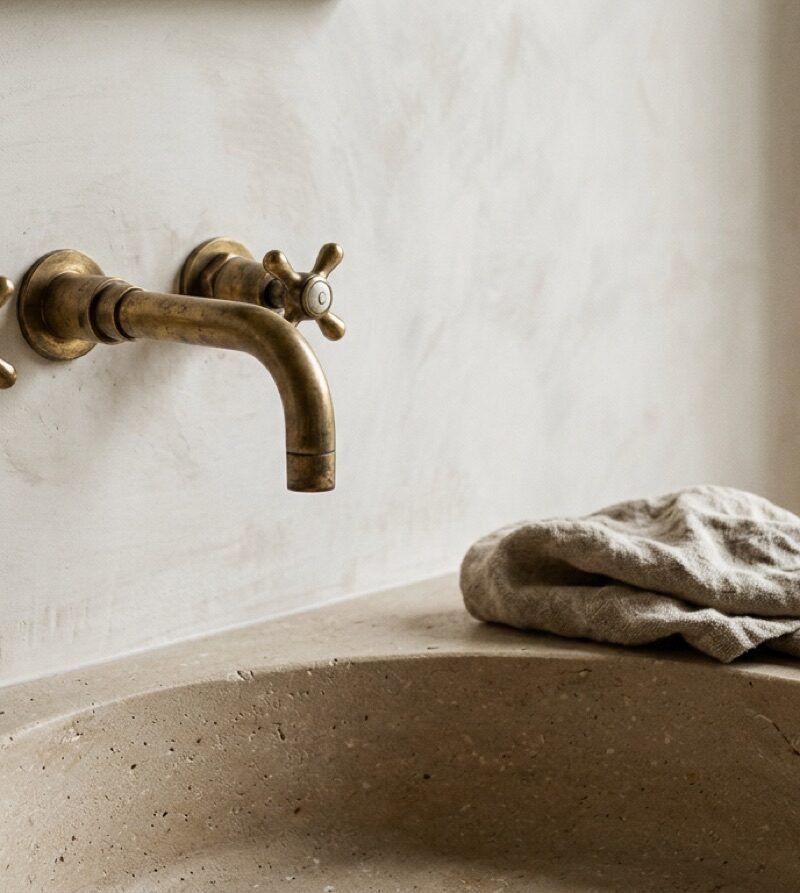
It is not only paint. Oak flooring looks honey-coloured in warm light and almost grey in a cool north light. Polished stone can glare in a south-facing kitchen at noon. Velvet changes colour depending on where you stand, and linen looks softer and more textured when light rakes across it from the side.
If you are choosing a floor, a worktop or a large fabric, ask for the biggest sample you can get and look at it in the room itself, on the floor or on the actual surface, at different times of day. A small sample in your hand under kitchen spotlights tells you very little.
How to test properly
Here is a simple method that takes about a week and saves a lot of repainting.
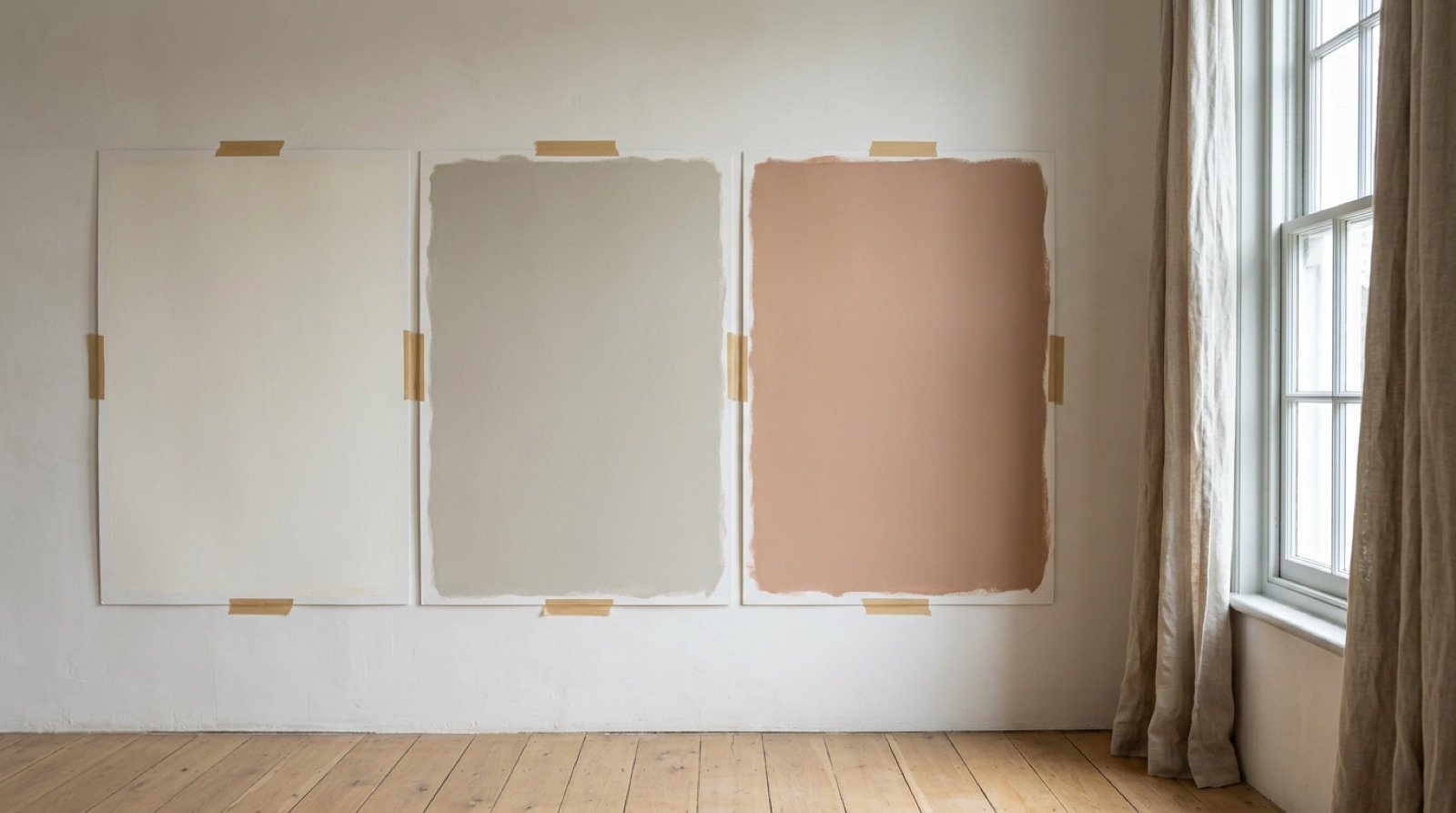
- Paint large samples, at least A3 size, on card or lining paper rather than straight onto the wall. Small patches are misleading, and painting directly on the wall makes the current colour influence what you see.
- Put each sample on two walls: one that gets direct light and one that stays in shade.
- Look at them in the morning, at midday, in the late afternoon and at night under your own lamps.
- Take photos at each time if you like, but trust your eyes over the camera, which tends to correct colour automatically.
- Remove anything that looks wrong at the time of day you use the room most.
Do not forget artificial light
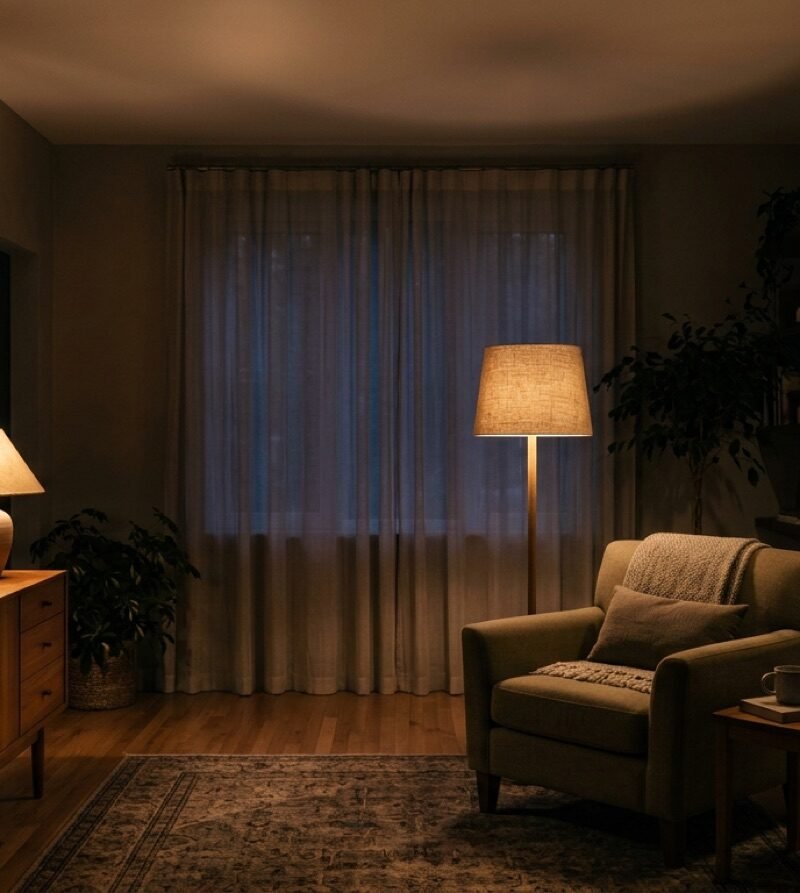
After sunset, your bulbs decide what the room looks like. Bulbs are rated in kelvin. Around 2700K gives a warm, cosy light similar to old incandescent bulbs, which suits living rooms and bedrooms. Around 3000K is slightly crisper and works well in kitchens and bathrooms. Above 4000K, light starts to feel clinical in a home. Mixing different temperatures in the same room is one of the most common reasons a space feels “off” in the evening, so try to keep them consistent.
For a fuller picture of how to plan lamps, ceiling lights and task lighting, read our guide to layered lighting.
The short version
Find out which way the room faces. Decide when you use it most. Test big samples where they will actually live, at the times that matter. Choose warm-leaning colours for cool light and feel free to go cooler where the light is warm. Do this once, properly, and the colour you choose will look on your wall the way it looked in your head.