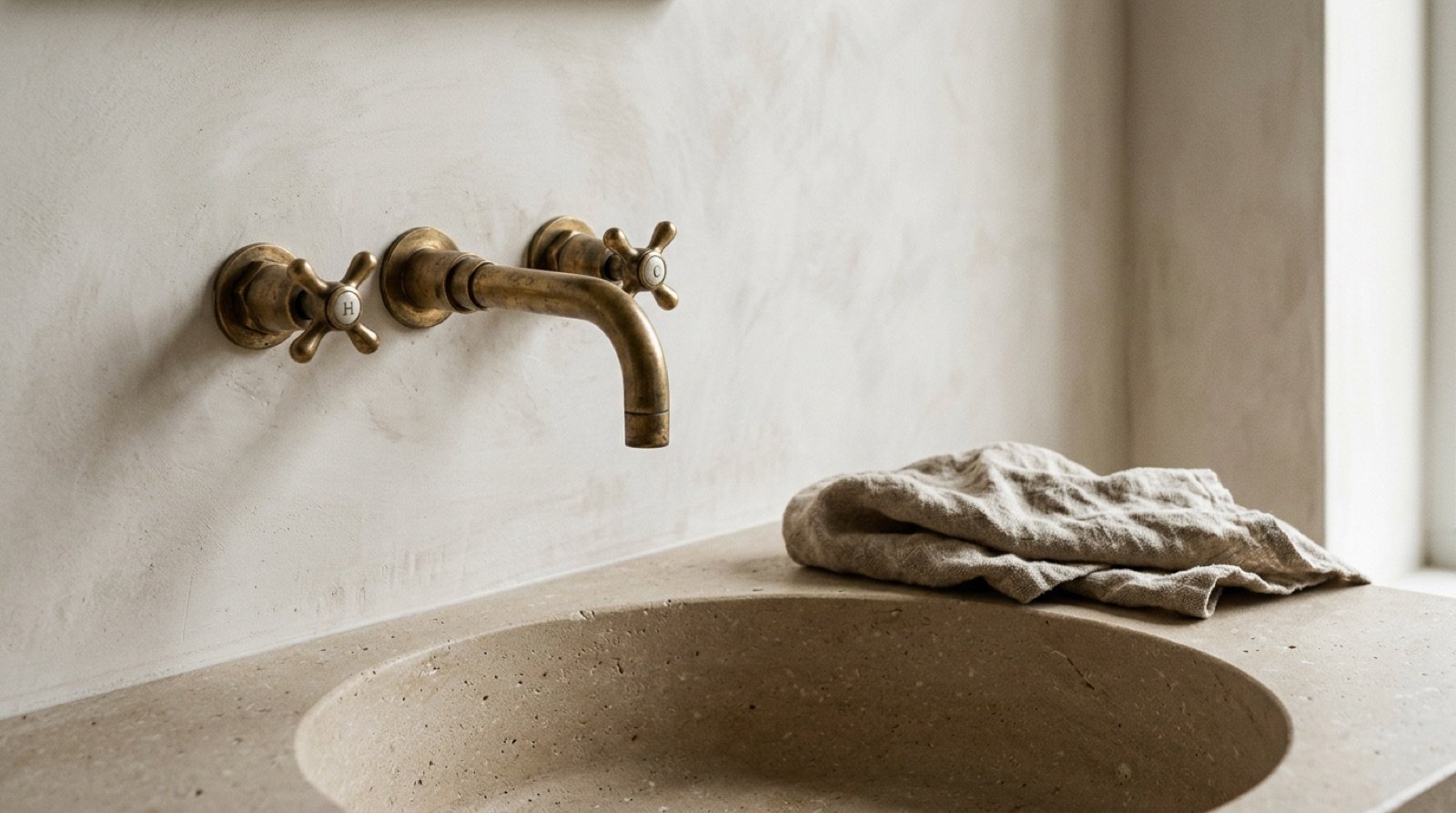
Walk into an old Italian kitchen or a Parisian apartment that has not been renovated for decades and you notice something. The materials look better than new. The brass handles are soft and warm, the wooden table has a deep glow, the stone worktop has a gentle shine where hands have rested on it for years. Nothing looks worn out. It looks lived in, in the best sense.
Choosing materials that age well is one of the simplest ways to make a home feel calm and expensive without spending more. Here are six worth knowing, and what each one asks of you.
1. Unlacquered brass
Most brass you buy is lacquered, coated in a clear layer that keeps it shiny. Unlacquered brass has no coating, so it reacts with air and touch. Over months it darkens to a soft golden brown, with brighter spots where it is handled most. That uneven patina is the whole point.
Living with it: leave it alone and it will settle into a warm, even tone. If you prefer it brighter, a brass polish restores the shine in minutes. Avoid lacquered brass that has started to peel, which looks worse than either option.
2. Limewash
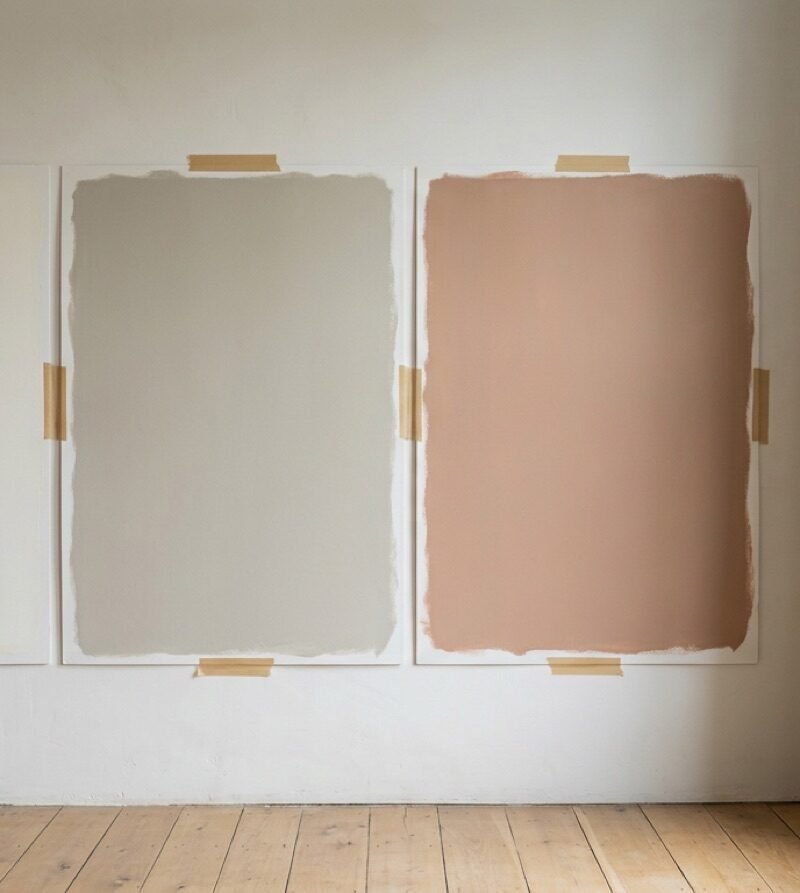
Limewash is a traditional wall finish made from lime and natural pigments. It goes on in soft, cloudy layers rather than a flat even coat, and it dries to a chalky, slightly mottled texture that moves with the light. It also lets old walls breathe, which matters in older houses with solid walls.
Living with it: it can rub off slightly on clothes in the first weeks and marks more easily than modern paint. Small scuffs blend in rather than standing out, and touching it up is simple because the finish is already uneven.
3. Oiled wood
Wood finished with oil, rather than a thick varnish, keeps its natural feel. Water marks and small scratches can be sanded lightly and re-oiled at home. Over time the wood deepens in colour. Oak turns honey, walnut softens, and the whole surface gets a quiet sheen.
Living with it: re-oil a dining table or worktop once or twice a year. Wipe spills quickly in the first months while the oil builds up.
4. Honed natural stone
Polished marble shows every etch and scratch. Honed marble, limestone and travertine have a matte surface that hides small marks and develops a soft, worn feel over the years. This is the stone you see in old bakeries and market halls.
Living with it: natural stone is porous and some kinds react to acids such as lemon juice and wine. Seal it, wipe spills quickly and accept that a few marks will become part of its character. If that idea bothers you, choose a harder stone such as granite or quartzite instead.
5. Leather
Good vegetable-tanned leather on a chair, a sofa or a handle gets softer and darker with use. It records how you live: the arm you always lean on, the spot where the sun hits each afternoon.
Living with it: keep it out of strong direct sun if you want it to age evenly, and use a leather conditioner a couple of times a year.
6. Linen
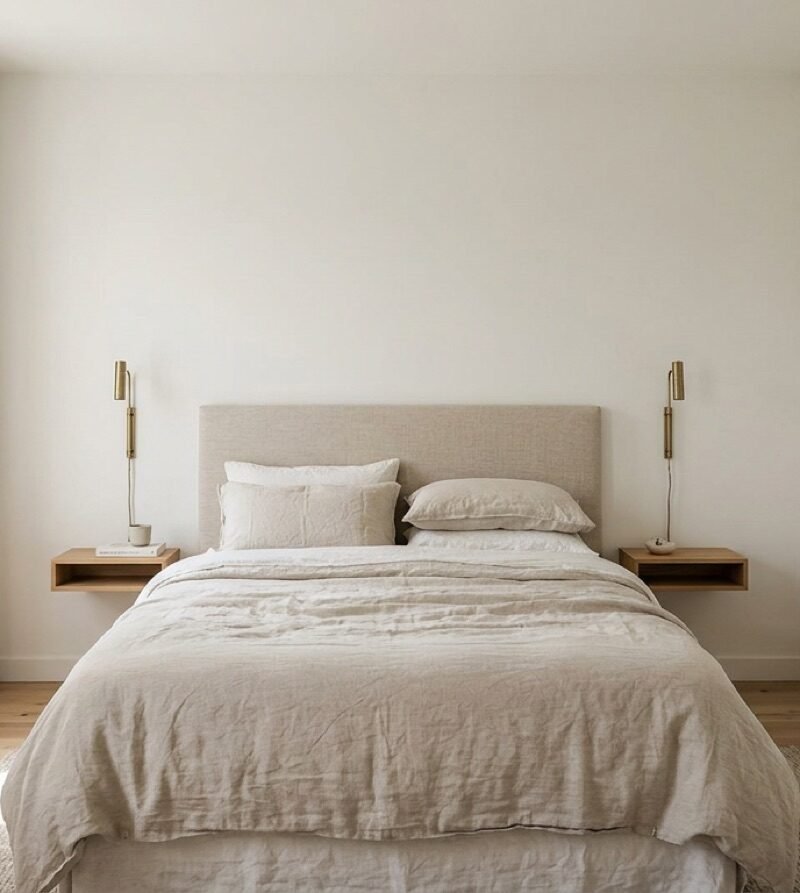
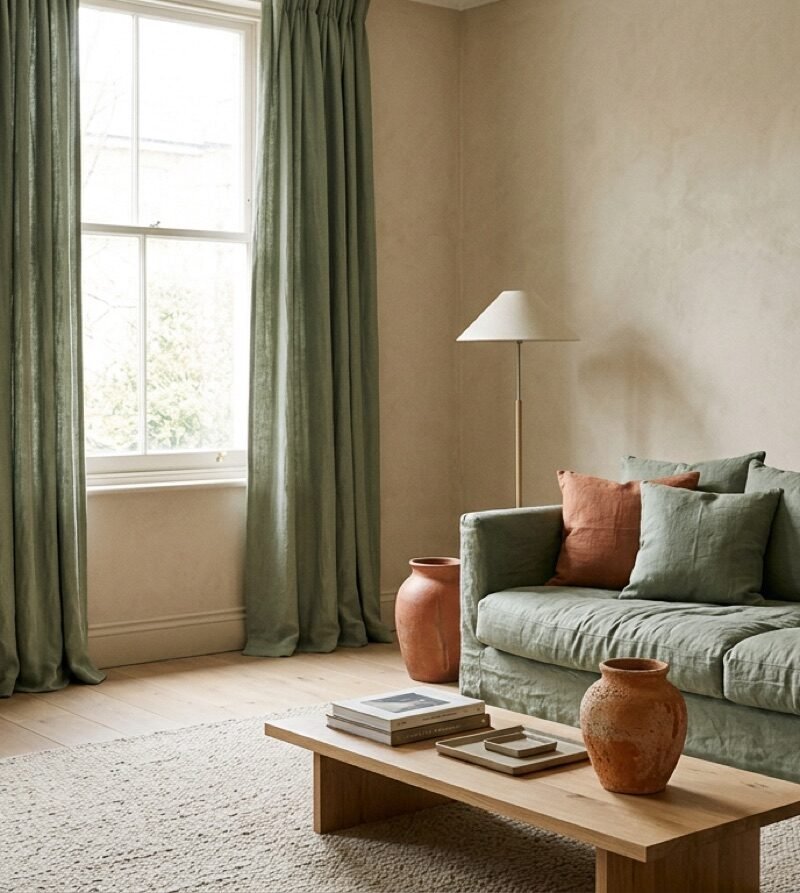
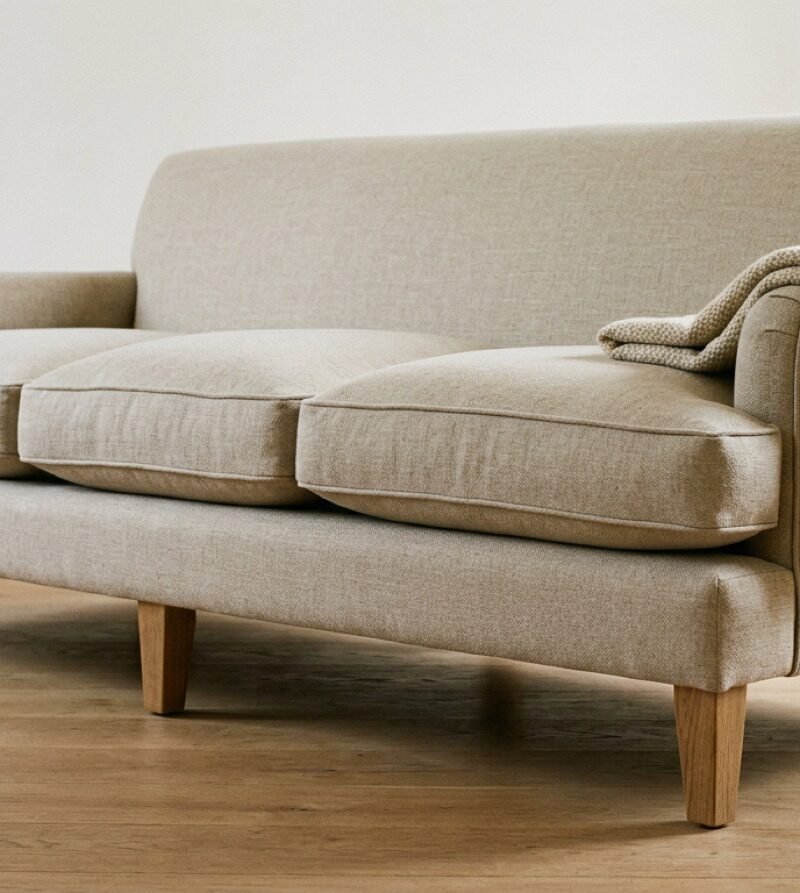
Linen curtains, bedding and slipcovers soften with every wash. They crease, which some people dislike, but that relaxed look is much of linen’s charm. Heavier linen hangs beautifully as curtains and lasts for many years.
Living with it: wash at low temperatures and dry it flat or on the line to keep it soft. Embrace the creases rather than ironing them flat.
What these materials have in common
Each of them is honest. It looks like what it is, and it changes in a way that tells a story rather than in a way that looks broken. Plastic laminate and high-gloss lacquer tend to age the opposite way: perfect on day one, then chipped, faded or peeling.
You do not need to use all six. One or two, chosen for the places you touch most, can change how a room feels: a brass handle on the kitchen door, an oiled oak table, linen at the windows. For how these materials react to different light, see our guide on reading the light in a room.