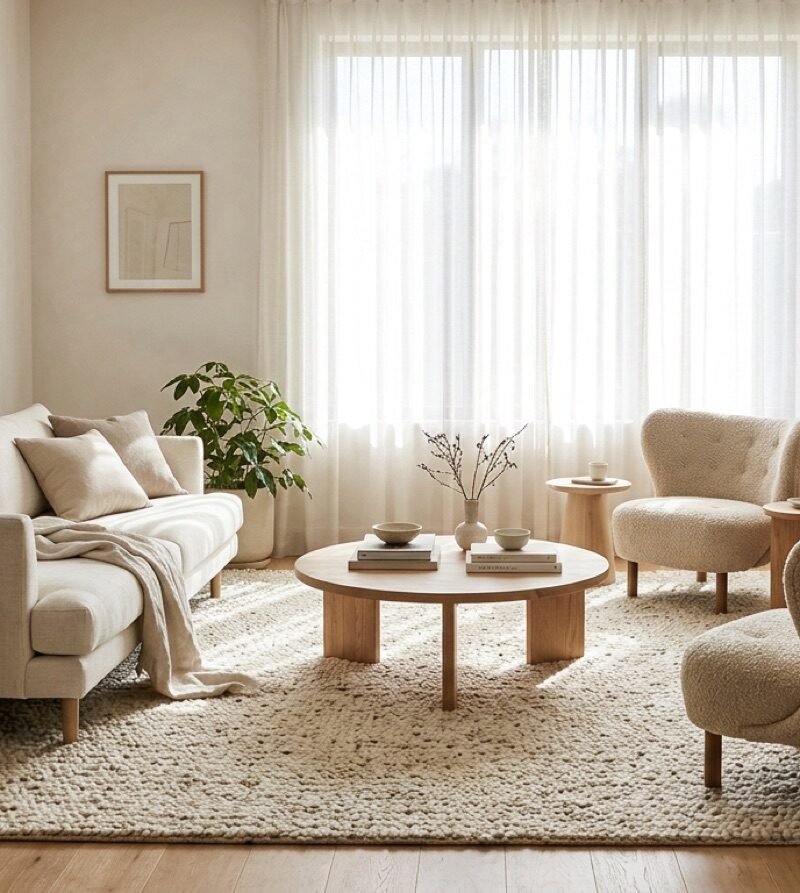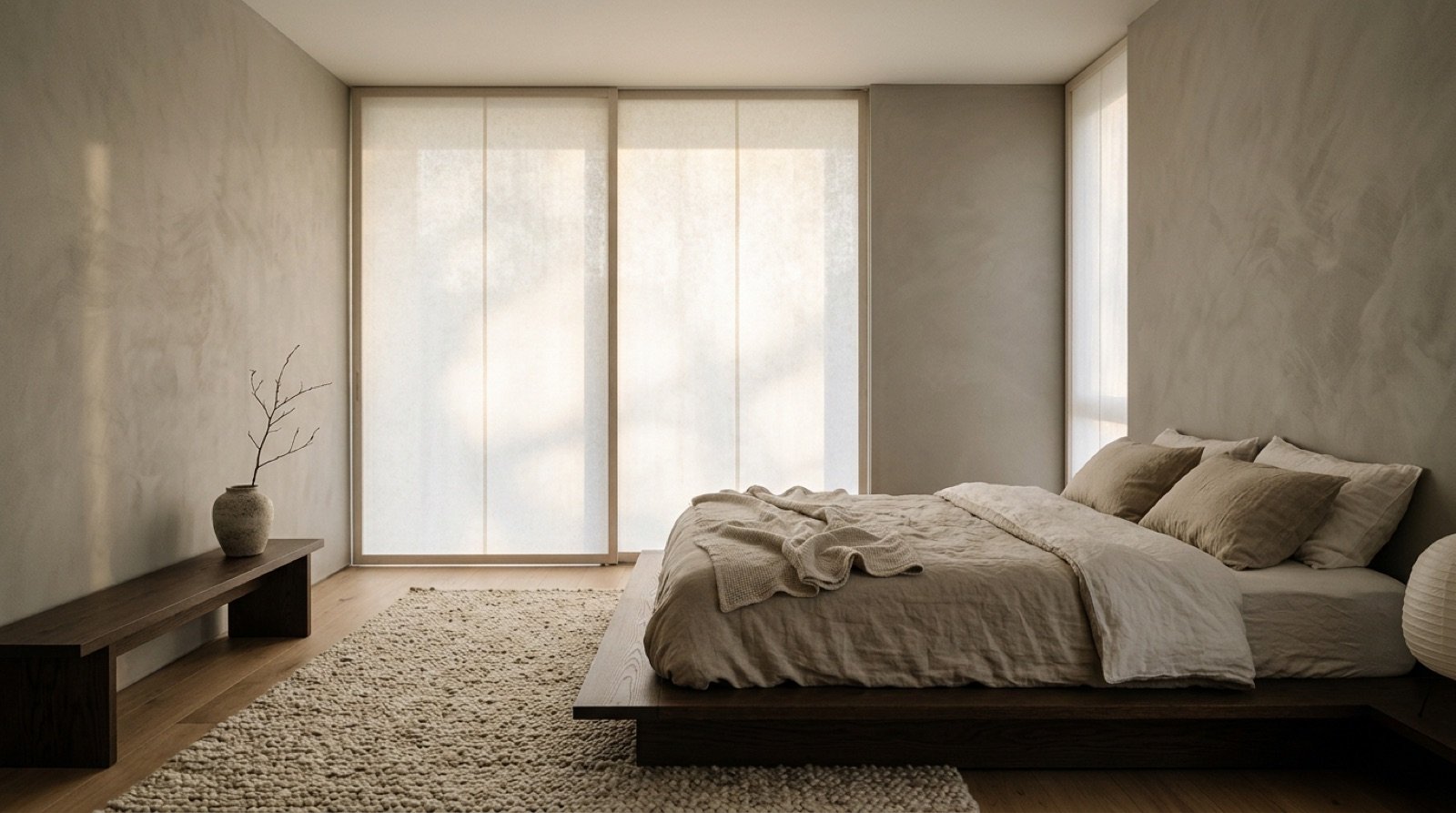
Japandi rooms are often described as minimal, which is the least useful word available. Minimal describes what has been removed. Hierarchy describes what remains and why, and it is the reason one restrained room feels serene while another simply feels unfinished.
Decide what the room says first
Every space makes a sequence of statements. A person entering registers one thing, then a second, then the rest as texture. If you have not decided that order, the room decides it for you, usually badly, and usually in favour of whatever is largest or brightest.
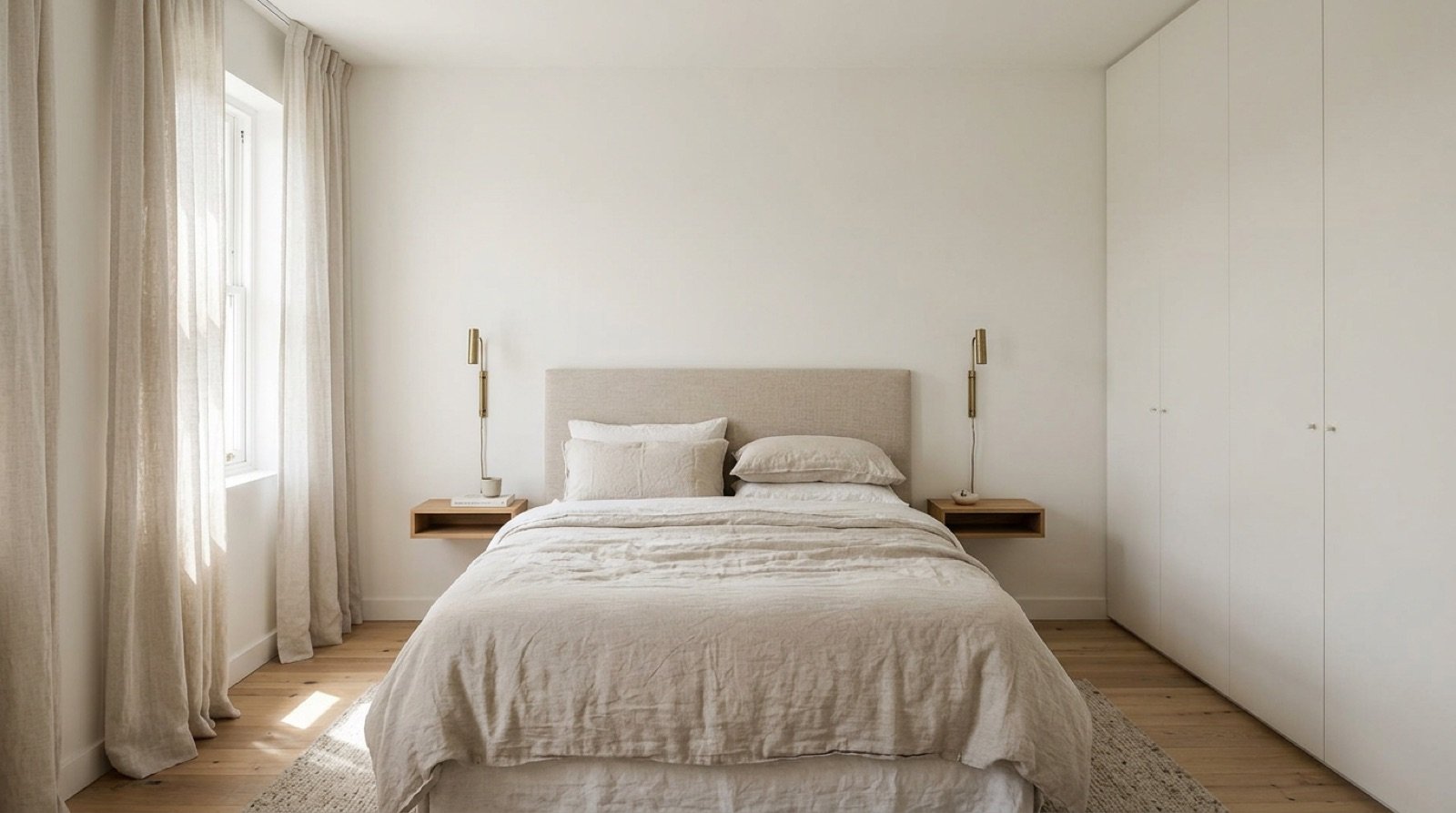
Choose the primary statement before selecting a single material. In a bedroom it is rarely the bed. More often it is the window, and the bed is the second remark.
A room without hierarchy is not calm. It is merely quiet, which is a different and less comfortable thing.
Use weight, not volume
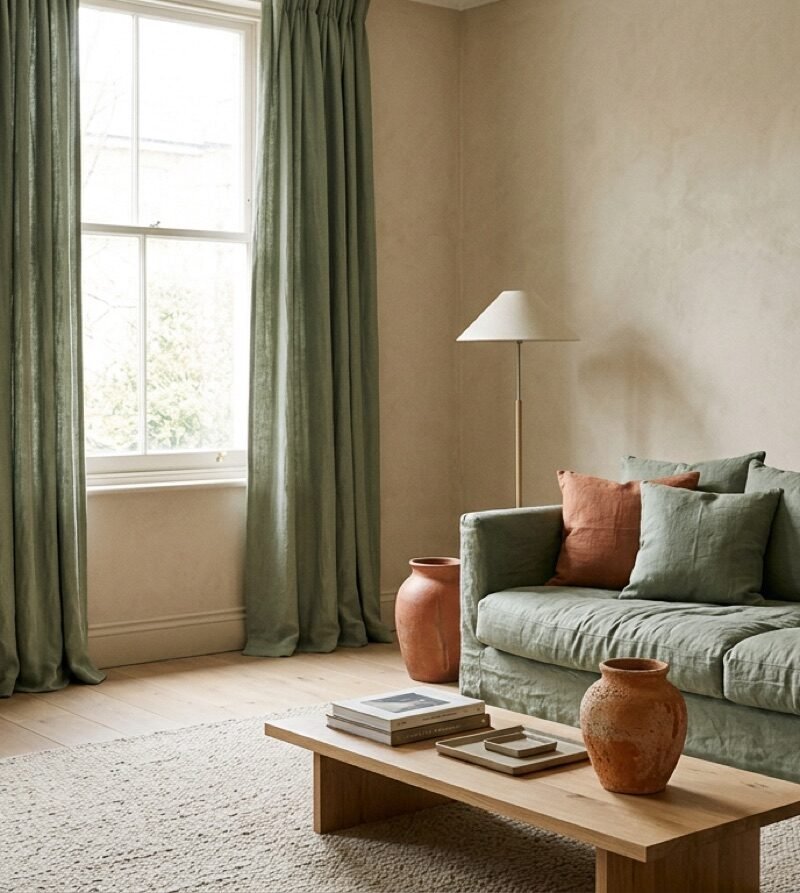
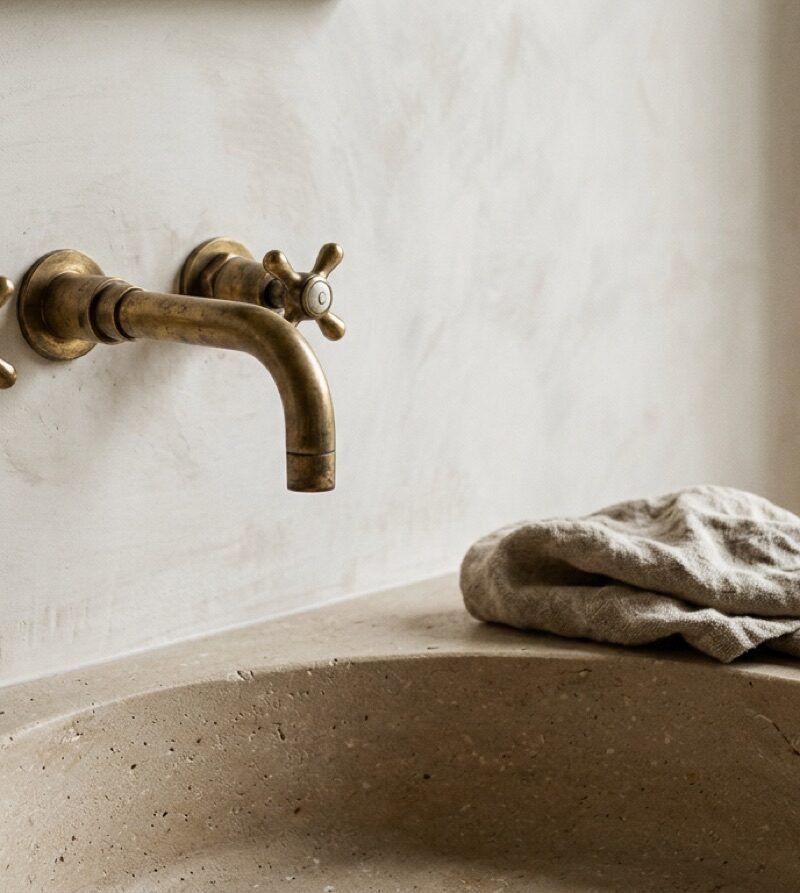
Hierarchy is established through visual weight: contrast, density, and how much surrounding space an element is granted. A small dark object against pale plaster outranks a large pale sofa. This is why Japandi interiors tolerate so few objects. Each one has to earn its rank.
Let light do the ordering
Natural light is the most reliable hierarchy tool available, and the only one that changes through the day. Arrange the room so the primary statement receives the best light at the hour the room is most used. A dining room ordered for morning light will feel wrong every evening.
Test the sequence before you commit
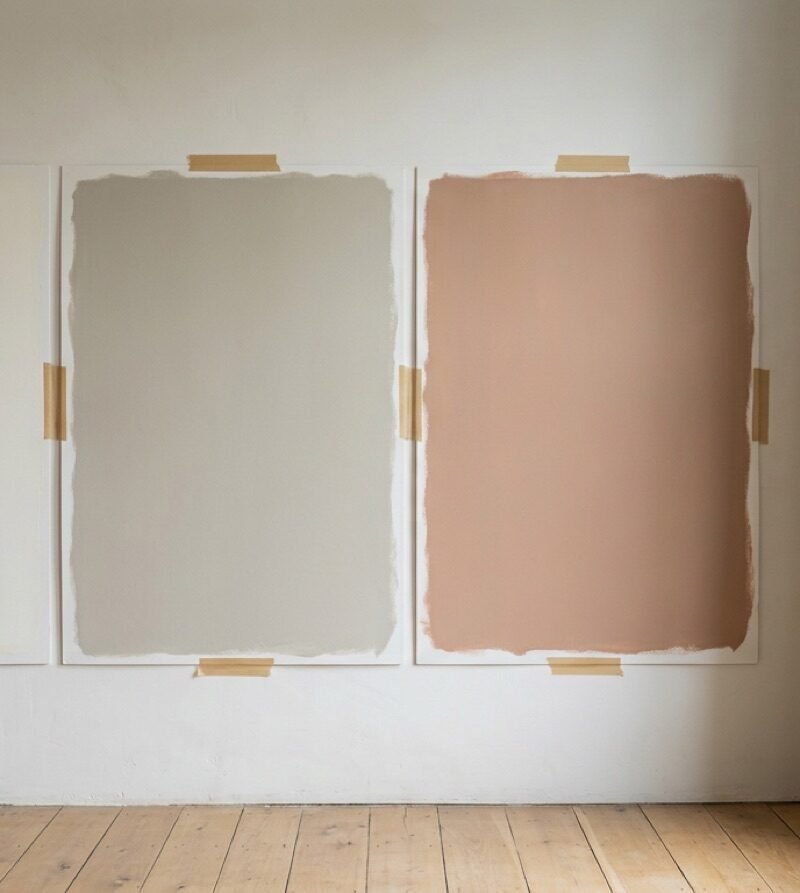
Before finalising materials, produce the room at three times of day and look only at what you notice first. If the order is not what you intended, the plan is wrong and no palette will rescue it.
This is the discipline the programme is built around: deciding what matters, then arranging light and weight so the room agrees with you.