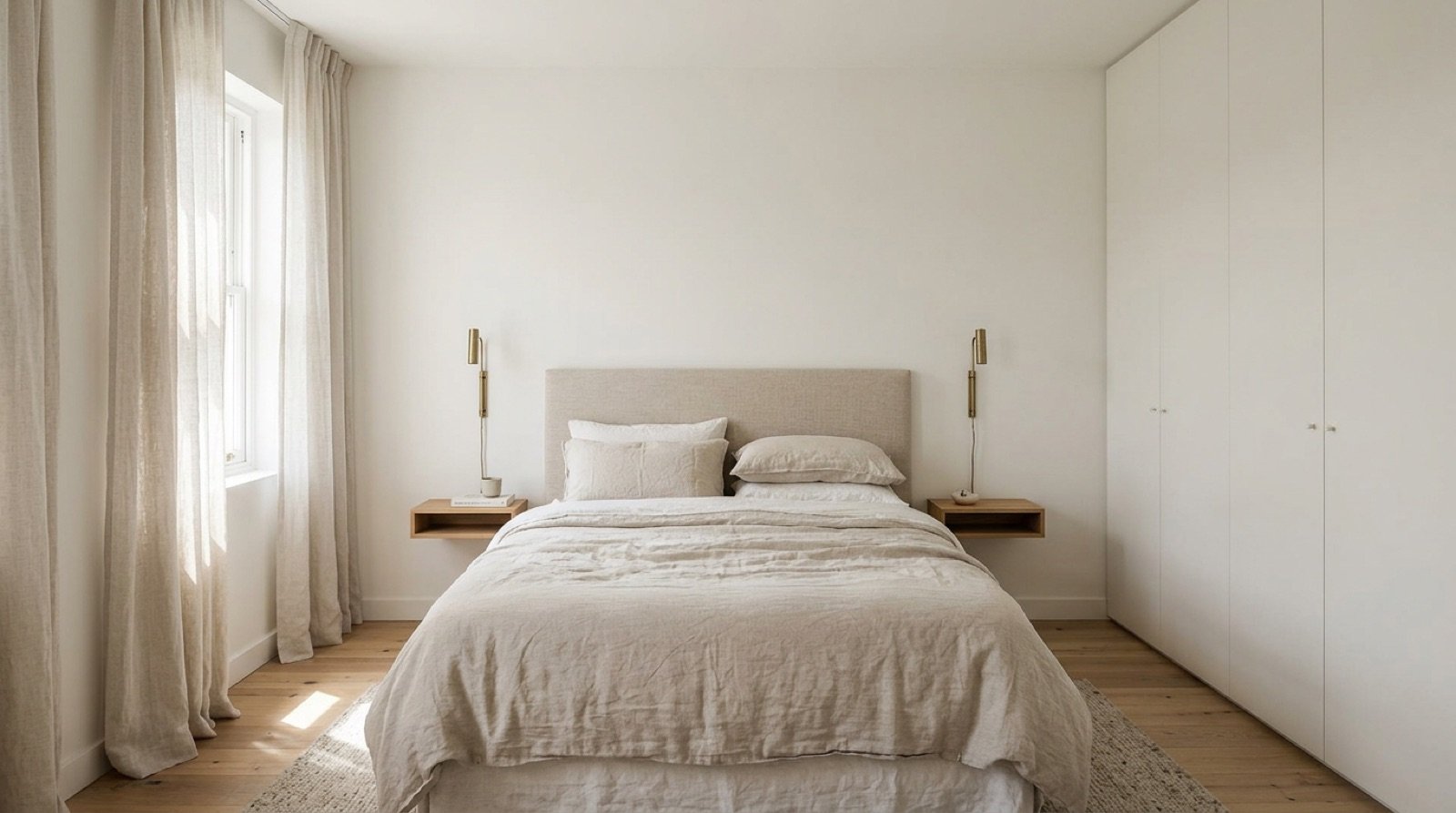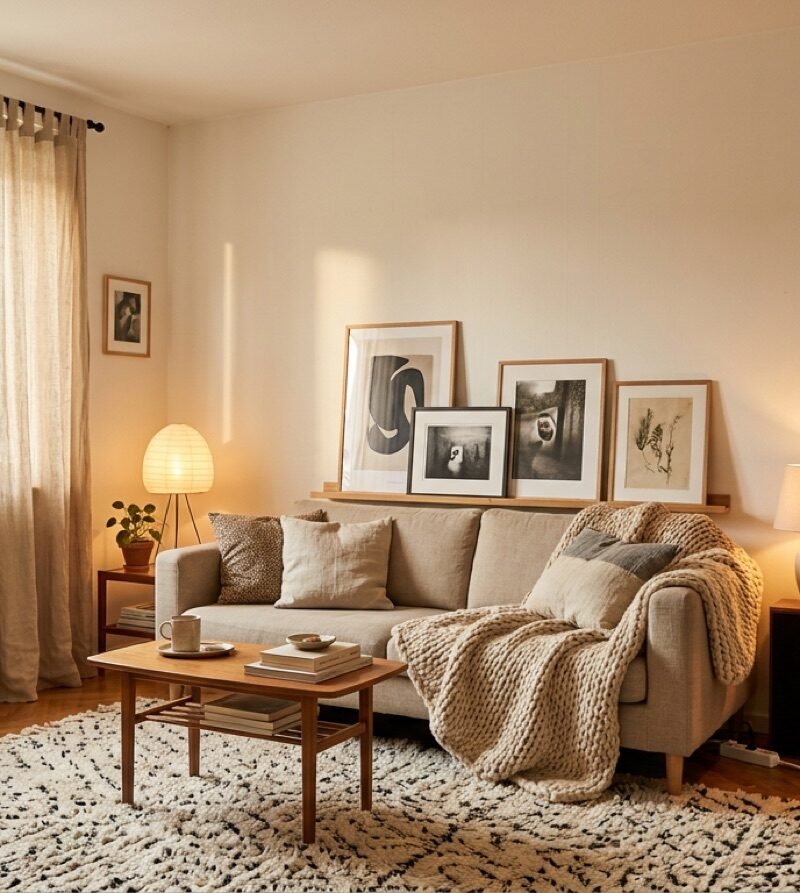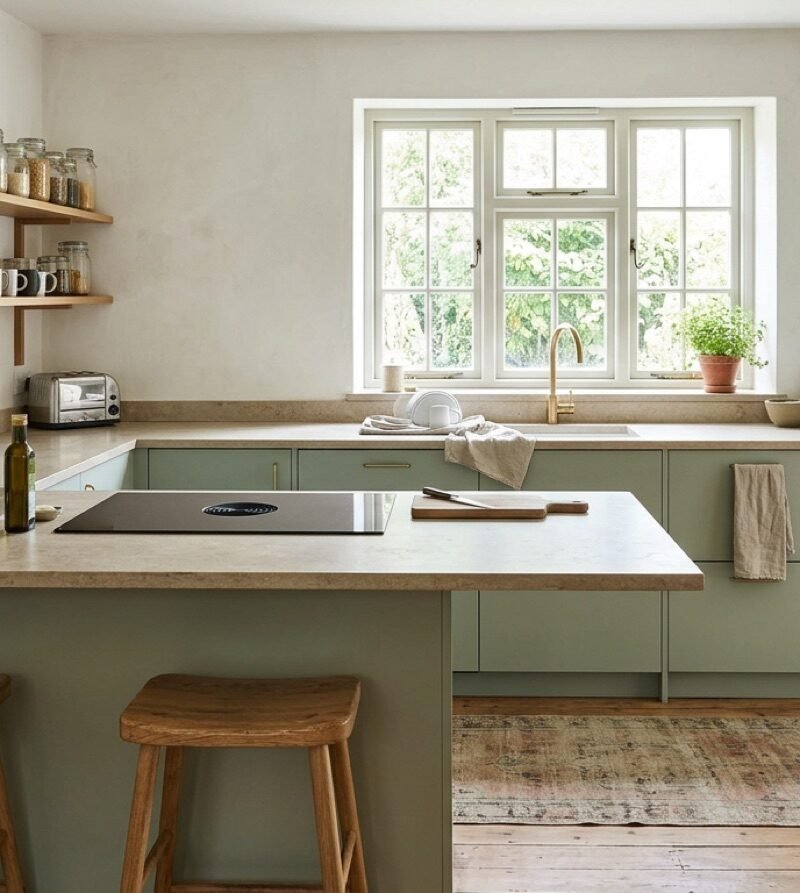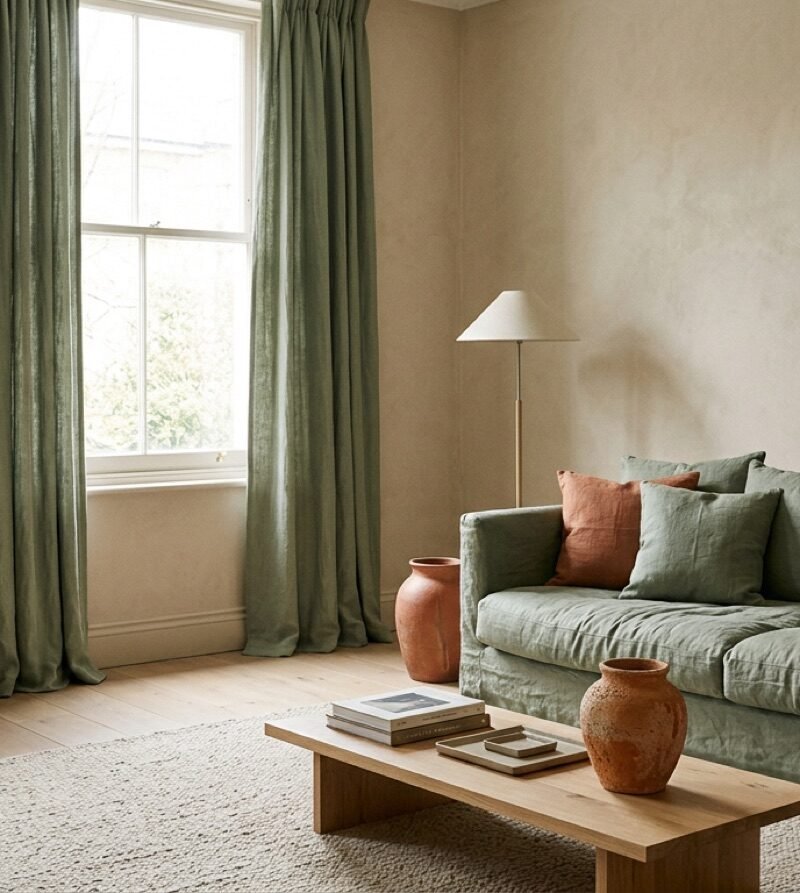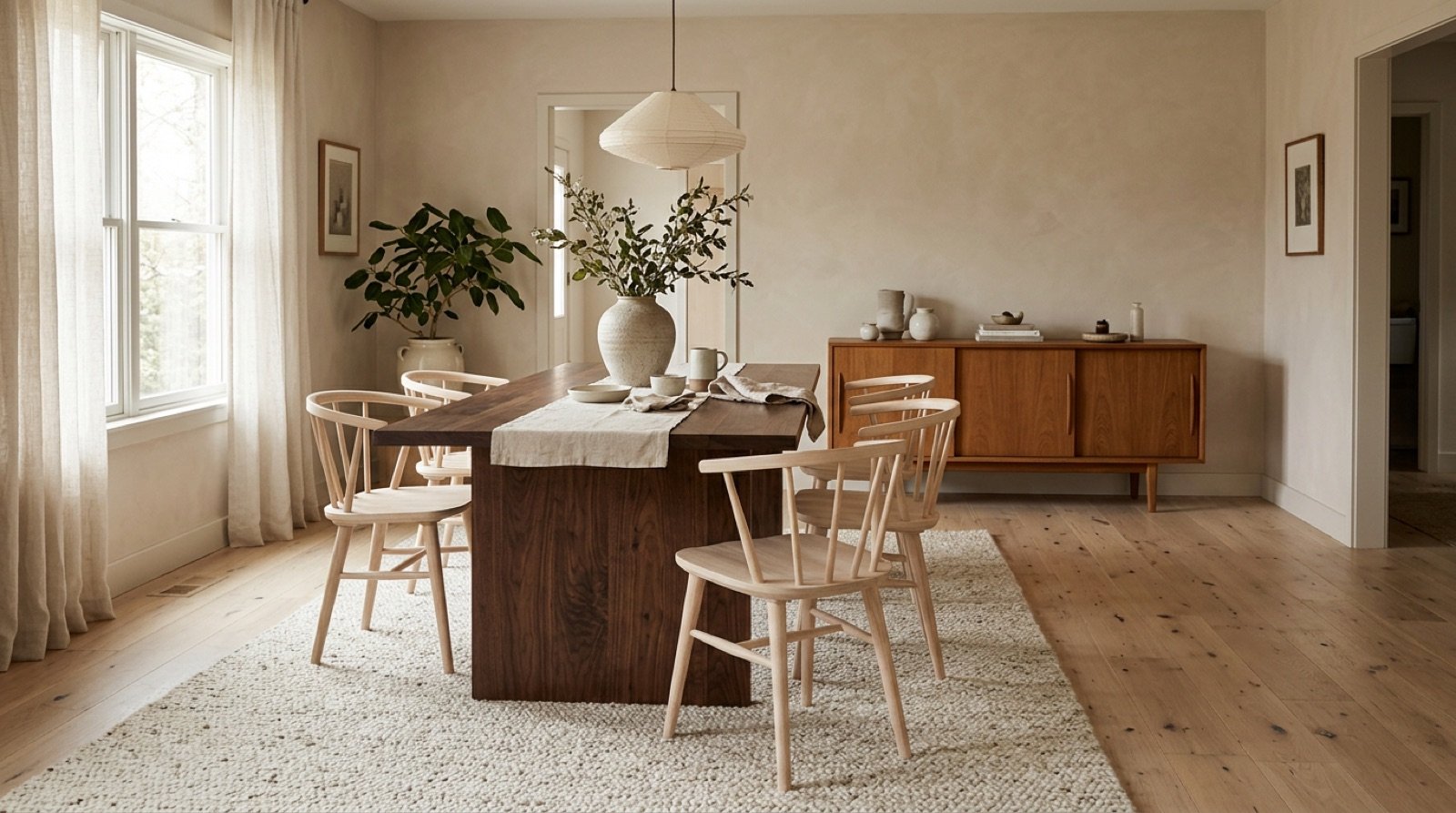
Very few homes have only one kind of wood. There is the floor you inherited, the table from your parents, the chairs you bought on sale and the shelf from a flat-pack store. Many people think the solution is to make everything match. In practice, a room where every wood is identical tends to look flat, like a showroom. Mixing woods well is what makes a home feel collected over time. It just needs a few principles.
Find the undertone
Like paint, wood has an undertone. Look closely at the color beneath the surface:
- Warm woods lean yellow, orange or red: cherry, mahogany, many pines, honey-toned oak.
- Cool woods lean gray or slightly green: weathered oak, ash with a gray wash, some walnut.
- Neutral woods sit in between: natural oak, beech, maple.
Woods with the same undertone usually sit happily together even if they are very different in depth. A pale warm oak and a deep warm walnut can look great side by side, while a warm orange pine next to a cool gray oak often feels uneasy. For more on undertones, see our guide to paint undertones; the idea is the same.
Use contrast on purpose
Woods that are almost the same but not quite are the hardest to combine, because they look like a failed attempt to match. Clear contrast looks deliberate. If your floor is mid-tone oak, choose a table that is clearly lighter or clearly darker, not one shade off.
Pick a dominant wood
Just as with color, give the room a hierarchy. Let one wood dominate, usually the floor or the largest furniture. Then add one or two other woods as supporting players. More than three distinct woods in one room starts to feel busy unless the room is very large.
Repeat each wood at least twice
A single dark walnut piece in a room full of pale wood can look out of place. Repeat it: a walnut frame on the wall, a small walnut tray, a lamp base. Repetition makes it look planned rather than accidental.
Pay attention to grain
Grain is the pattern of the wood. Oak has a strong, open grain; maple and beech are fine and smooth; walnut is often wavy and dramatic. Mixing very busy grains next to each other can feel noisy. Combine a strong grain with a quieter one, or let the boldest grain appear on one piece only.
Put something between them
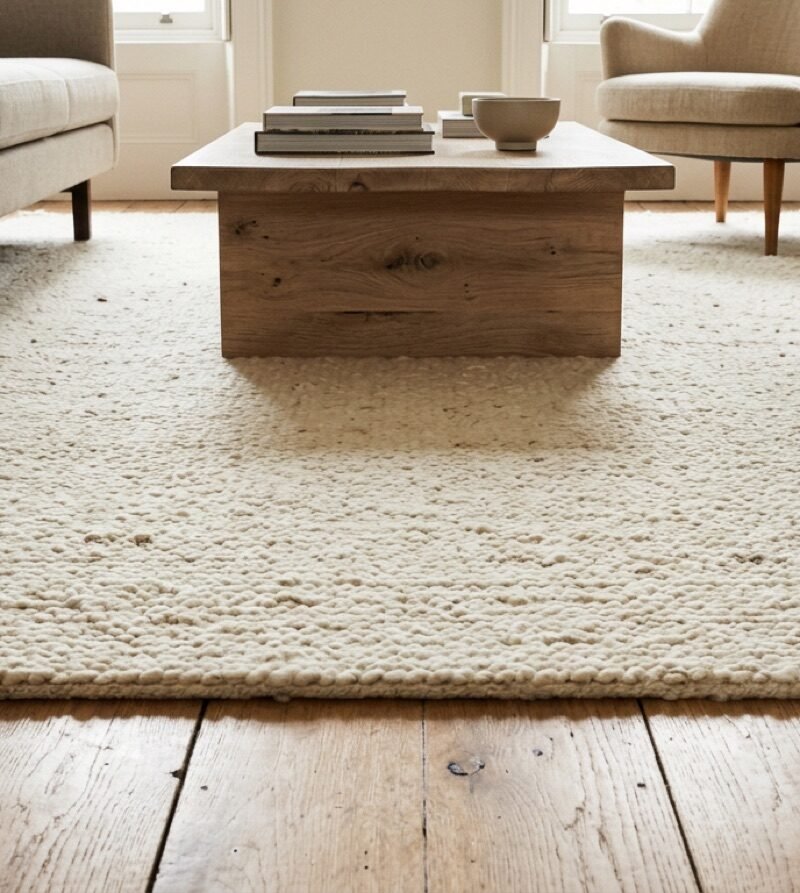
When a wooden table stands directly on a wooden floor of a different tone, the two can fight. A rug between them creates a pause and makes both look better. The same works with a painted wall behind a wooden sideboard, or a linen runner on a wooden table. See our rug guide for sizing.
Match the finish, not the color
Finish often matters more than tone. A mix of high-gloss varnished wood and matte oiled wood looks less unified than several different colors all in a soft, oiled finish. If you are refinishing anything, choose a similar sheen to what is already in the room.
When to paint instead
Sometimes a piece simply does not work, and painting it is the kindest option. A dated pine dresser in a soft, muted color can become a lovely feature. Keep good solid hardwoods natural if you can; they are hard to strip once painted.
A quick check
- Lay small samples or photos of your woods side by side in daylight.
- Sort them by undertone: warm, cool, neutral.
- Choose the dominant wood.
- Keep up to two others with the same or a neutral undertone, with clear contrast.
- Repeat each one at least twice around the room.